Practical, easy-to-understand welding guidance, real-world examples, and tools to help improve weld quality, productivity, and compliance. For welding professionals including welders, supervisors, inspectors, engineers, and business owners.
Are Concave Fillet Welds At Risk of Failing?
|
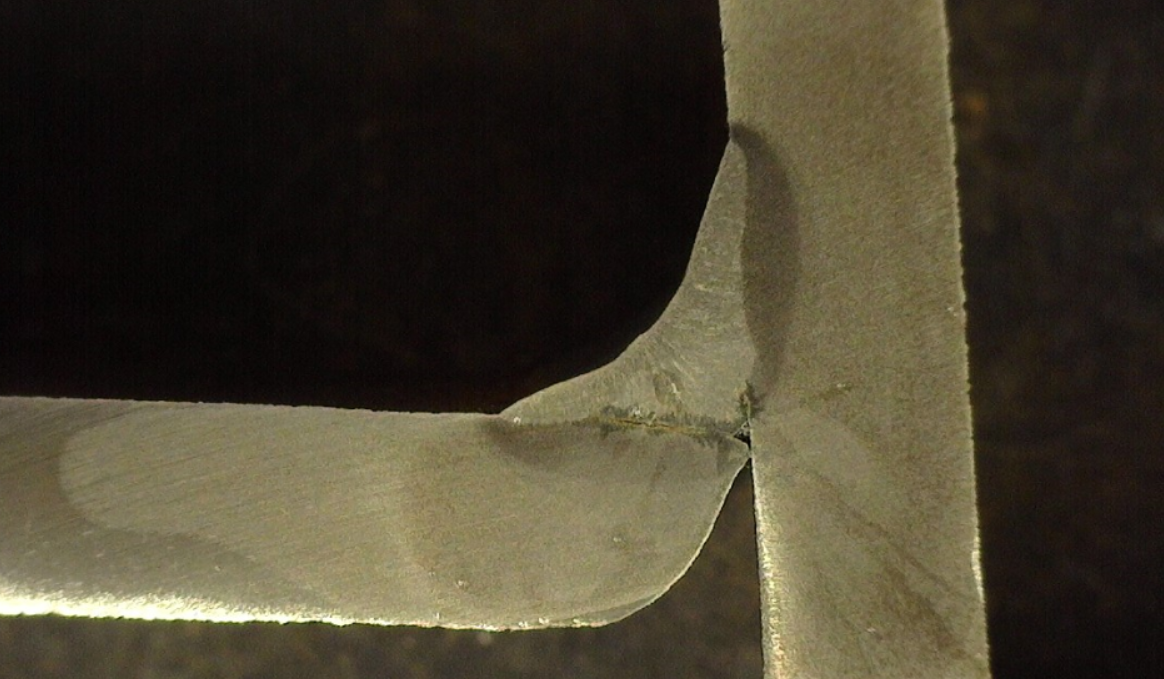
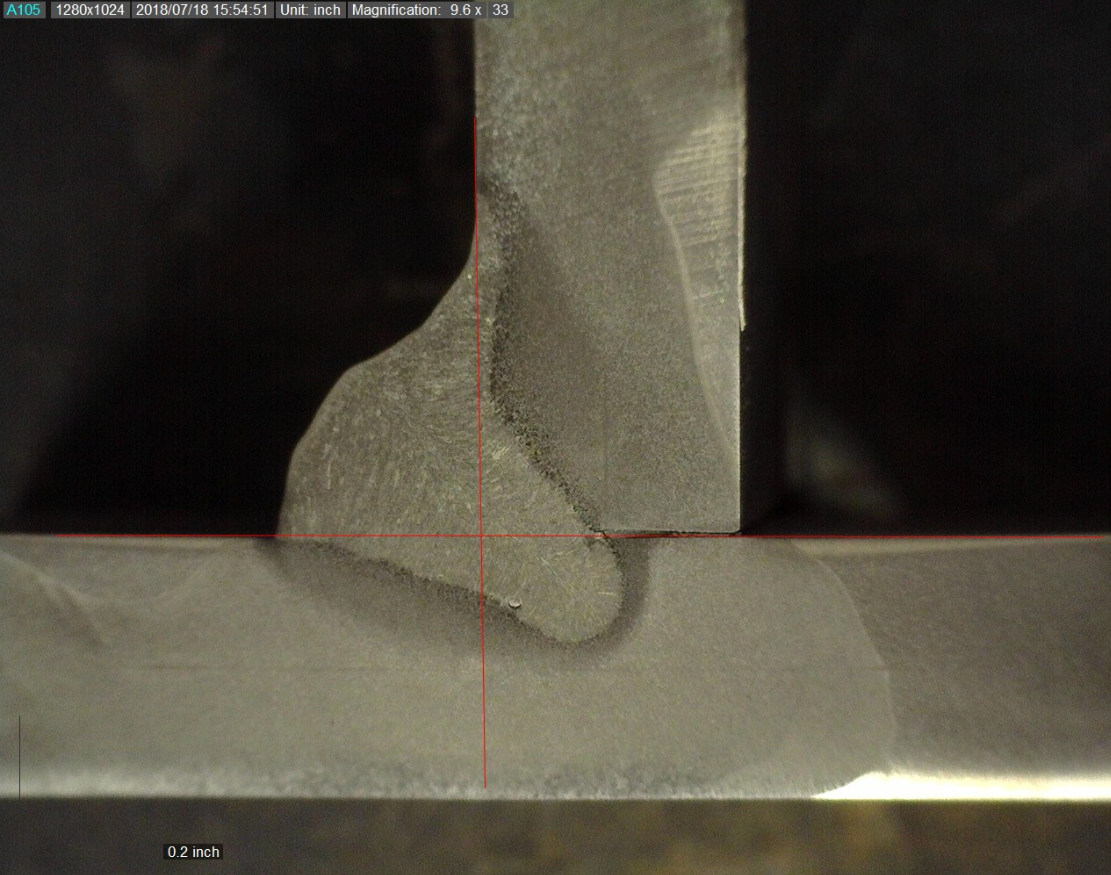
Trouble seeing text or images? View this article in your web browser Hello Reader, We constantly hear welding experts, welding engineers, CWIs and other industry professionals say that concave fillet welds are bad and should not be allowed. This is a hard stance that may be supported by field failure, but more often than not only by anecdotal evidence. However, it is worth noting that a concave fillet weld is not necessary a problem and sometimes it provides a desirable bead profile. The following in an excerpt from Weld Troubleshooting for Non-Welding Engineers There is nothing wrong with concave welds so long as they attain the desired throat dimension. AWS D1.1/D1.1M:2020 Structural Welding Code (Steel) states that “there is no restriction on concavity as long as minimum weld size (considering both leg and throat) is achieved.” Concave welds with adequate throats are not a problem. Concave welds are actually good for transferring stresses since they have very smooth transitions at the toes. They are excellent in fatigue loading conditions. The problem comes when the throat dimension is not adequate. If the design calls for a 1/4–inch fillet weld leg size, the assumption is that the weld has a flat face and has a minimum throat dimension of 0.177 inches. If the leg size is achieved, but the weld is concave, the throat will be less than 0.177 inches and thus undersized. This can lead to centerline cracking. So what causes concavity and how can we correct it? Following are probable causes and fixes for CONCAVITY. Cause: Travel speed is too fastWhen the welding travel speed is too fast, weld metal cannot be deposited fast enough to avoid concavity. There just isn’t enough weld metal to create a flat weld face. Welding procedures should always specify a travel speed range. Travel speed is an essential variable that must be specified in all welding procedures to ensure sound welds. Going below, or exceeding this travel speed range can generate undesirable conditions. Solution 1: Reduce travel speedReducing travel speed will allow for sufficient weld metal to be deposited to produce a flat to slightly convex weld face. Solution 2: Avoid welding vertical downWelding in the vertical position with downward progression (vertical down) is conducive to extremely fast travel speeds. Welders speed up in order to prevent the molten weld puddle from rolling ahead of the arc and causing problems like incomplete fusion, spatter and overlap. This is due to gravity forcing the weld metal down at a fast rate. If at all possible, position the part so that it can be welded in the flat or horizontal position.
Weld done in the vertical position with downward progression. The concave weld face is due to the excessive travel speed required when welding downhill to avoid the molten weld puddle from rolling ahead of the arc and creating other issues.
|
Welding Answers
Practical, easy-to-understand welding guidance, real-world examples, and tools to help improve weld quality, productivity, and compliance. For welding professionals including welders, supervisors, inspectors, engineers, and business owners.
Trouble with text or images? View this article on your web browser Hello Reader Galvanized steel is widely used in metal fabrication because of its excellent corrosion resistance. From structural steel components and handrails to trailers, agricultural equipment, and outdoor structures, galvanizing provides a relatively inexpensive way to protect steel from corrosion and extend its service life. However, welding galvanized steel presents challenges that are not encountered when welding...
Trouble with text or images? View this article on your web browser. Hello Reader Competition among welding equipment manufacturers is a great thing. Companies such as Miller, Fronius, OTC, Lincoln Electric, and others continue to develop welding machines that are more capable, easier to use, and increasingly affordable. Welders and manufacturers have benefited tremendously from these advancements. However, there is a potential downside: the belief that better welding equipment is the answer...
Trouble with text or images? View this article on your web browser Hello Reader Few welding discontinuities create more concern than cracks. Unlike porosity, undercut, or excessive reinforcement, cracks are almost never acceptable under structural welding codes because they can significantly reduce the strength and reliability of a welded joint. More importantly, cracks tend to propagate under service loads, meaning a small crack can eventually become a catastrophic failure. Understanding why...