Practical, easy-to-understand welding guidance, real-world examples, and tools to help improve weld quality, productivity, and compliance. For welding professionals including welders, supervisors, inspectors, engineers, and business owners.
How to Reduce Welding Labor Cost in Fabrication Shops
|
Trouble with text or images? View this article in your web browser Hello Reader In most fabrication businesses, welding labor is the single largest controllable cost. Yet in many shops, welding labor is not actively managed, it is absorbed. When margins tighten, management looks at material pricing, overhead, or scheduling. Rarely is welding itself analyzed as a controllable engineering variable. But welding labor cost is not fixed. It is heavily influenced by engineering decisions. Why Welding Labor Cost Is Often MisunderstoodMany shops calculate welding cost as: Hourly labor rate × estimated time. But that estimate is rarely engineered. Welding labor cost is influenced by:
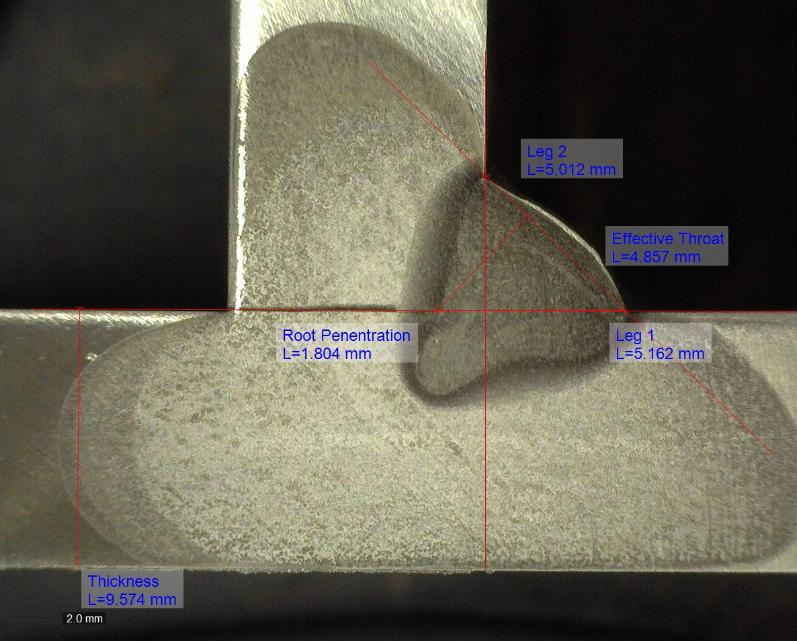
If these variables are not analyzed, labor cost becomes reactive rather than controllable. The Engineering Variables That Drive Welding Cost1. Weld SizeOversized welds are common. This is particularly true with fillet welds. The vast majority of fabrticators overweld. The worst part is they know they do, but they don't know how costly it is. A fillet weld that is even slightly oversized increases:
That single design decision can increase welding labor cost by 30–50% on high-volume joints. It is important to recognize that although many welders choose to slightly overweld based on a print, it is the management and engineering teams that many times increase weld sizes on print becasuse they want to play it safe.
Fillet gauges are critical tools for welders in esnsuring proper weld size and reduce unnecessary welding labor costs, yet a very small percentage of fab shops actually use them. 2. Process SelectionIs the selected welding process optimized for productivity? For example:
Process choice directly impacts:
3. Operator Factor (Arc-On Time)Most shops do not measure arc-on time. Arc-on time often ranges between 5–20%. Improving joint preparation, part fit-up, and weld sequencing can significantly increa2se productive welding time without hiring additional labor. Small improvements in operator factor compound quickly.
Many fab shops do not see grinding as rework, but rather just another operation. Paying attendion to the amount of time spent grinding can be a wake up call to do a better job reducing rework and scrap. Grinding negateively affects operator factor and significantly increases welding labor costs. 4. Welding Procedure EfficiencyWPSs are often written for compliance, not productivity. Questions to evaluate:
Procedure optimization alone can reduce welding labor cost significantly. 5. Rework and Defect RecurrenceRework is hidden labor cost. Recurring defects add:
If welding defects are not engineered out of the process, labor cost remains inflated. Many fabrication shops don't track rework. Becuase the cost of rework is now know, rework becomes part of the process and quickly becomes unnoticeable. Many fabrication shops are surprised when they start measuring rework. But, if you don't measure it you can't maanage it. How to Begin Reducing Welding Labor CostImproving welding productivity does not require capital investment in many cases. Start with three actions: 1. Analyze One High-Volume WeldSelect one recurring weld joint and evaluate:
Even small adjustments can yield measurable savings. Can hyou increase the deposition rate by at least 10%? Can the joint details be changed? For example, can the tolerances be controlled? Can we decrease groove angles? Can we us a PJP where we are currently using a CJP? 2. Estimate Cost Per Inch of WeldEven a rough estimate changes perspective. Calculate:
This simple exercise often reveals where optimization is possible. 3. Review One Procedure for ProductivityEvaluate one WPS and ask: Was this written for compliance only — or for efficiency? Many procedures can be refined without violating code requirements. Welding Is Not Just a Trade Cost — It Is an Engineered VariableHigh-performing fabrication shops treat welding labor as:
They understand that welding performance is driven by engineering decisions, not just operator effort. Reducing welding labor cost is not about pushing welders to work faster. It is about designing a system that produces efficiency naturally. If welding labor is one of your largest expenses, the real question is: Is it being engineered — or simply absorbed? |


Welding Answers
Practical, easy-to-understand welding guidance, real-world examples, and tools to help improve weld quality, productivity, and compliance. For welding professionals including welders, supervisors, inspectors, engineers, and business owners.
Trouble with text or images? View this article in your web browser Hello Reader In many fabrication shops, welding engineering is viewed as something that only matters to welding engineers. The assumption is that welders should focus on making welds, inspectors should focus on acceptance criteria, and engineers should handle the technical details behind the scenes. In reality, some of the biggest quality, productivity, and rework problems in fabrication occur because critical welding...
Trouble with text or images? View this article in your web browser Hello Reader The qualification of welding procedures is one of the most important steps in ensuring weld quality. A welding procedure may look good on paper, but unless it has been tested—or developed within the limits of an accepted prequalified procedure—there is no assurance that it can consistently produce sound welds. As discussed throughout this series, welding quality is not determined by appearance alone. Proper...
Trouble seeing images or text? View this article on your web browser Hello Reader, What drives the need for preheat prior to welding carbon steels? Is it carbon content, material thickness, welding process, or all of the above? We get asked this question all the time so we decided to update a previous article on this topic. Preheat is used when a base material, due to its chemical composition, thickness or level or restraint, is susceptible to cold cracking. Knowing what temperature to...