Practical, easy-to-understand welding guidance, real-world examples, and tools to help improve weld quality, productivity, and compliance. For welding professionals including welders, supervisors, inspectors, engineers, and business owners.
Why Most Welding Procedures Fail Before Production Starts
|
Trouble with text or images? View this article in your web browser Hello Reader In many fabrication shops, welding procedures exist—but they don’t always work. They may be technically correct, code-compliant, and properly documented, yet once production begins, problems start to surface. Welders struggle to follow them. Inspectors flag recurring issues. Rework increases. Productivity suffers. And eventually the welding procedures end up as simply a compliance document that no one follows. When this happens, the blame is often placed on execution. The assumption is that the procedure itself is sound and that the issue lies with training, supervision, or discipline on the shop floor. The welders end up getting most of the blame. In reality, most welding procedures that fail in production do so long before the first arc is struck. This article is part of the Developing Welding Procedures in the Real World series, which examines how welding procedures are developed, implemented, and used in real fabrication environments. The Assumption That Drives Most FailuresA common belief in the welding industry is that if a welding procedure meets the requirements of the applicable code or standard, it should perform well in production. On the surface, this makes sense. Codes exist to ensure safety and minimum levels of quality. Welding procedures are written, approved, and filed. From a compliance standpoint, the job appears complete. The problem is that code compliance is often treated as the finish line, rather than the starting point. Welding codes establish minimum requirements. They do not account for the specific realities of a fabrication environment such as equipment limitations, welder skill levels, joint accessibility, productivity targets, or cost constraints. When procedures are developed with compliance as the sole objective, they often overlook the factors that determine whether the procedure can actually be followed consistently in production. What “Developing a WPS” Is Commonly Reduced ToIn practice, welding procedure development is frequently simplified to a short list of familiar steps:
Once the procedure exists on paper, it is assumed to be ready for use. This approach confuses writing a welding procedure with developing one. Writing a WPS is an administrative task. The difference between the two is where most problems originate. A WPS Is an Engineering Decision ChainA welding procedure is not a collection of independent variables. It is a sequence of interdependent decisions, each of which influences quality, productivity, and cost. When welding engineers develop procedures, they do not start by asking, “What amperage should I use?” They start by understanding the application and working systematically through the factors that govern whether a weld can be made reliably and economically. These considerations include, but are not limited to:
When these factors are not evaluated deliberately—and in the proper context—the resulting procedure may look acceptable on paper while being fundamentally flawed for production use. Where Welding Procedures Break Down Before Production BeginsMost welding procedure failures can be traced back to decisions made early in development. These are not dramatic errors. They are often subtle assumptions that go unchallenged. Decisions Made Without Understanding the ApplicationA welding procedure cannot be developed in isolation from its intended use. When contract documents, service conditions, or customer requirements are not fully understood, procedures are created that meet generic expectations rather than project-specific needs. This can result in welds that technically meet acceptance criteria but are not suitable for how the product will be used or inspected. Base Metal AssumptionsAnother common failure point is assuming that all base metals within a category behave the same way. Carbon steels, for example, are often treated as interchangeable. Differences in chemistry, thickness, supplied condition, and weldability are overlooked. These differences directly affect preheat requirements, cracking susceptibility, and heat input sensitivity. When base metal behavior is not fully considered during procedure development, defects tend to appear later—often inconsistently and without an obvious pattern. Process Selection Based on FamiliarityWelding processes are frequently selected based on what the shop is accustomed to using rather than what best fits the application. A process that works well in one position, environment, or joint configuration may perform poorly in another. Productivity losses, excessive cleanup, and inconsistent weld quality often result when process limitations are not accounted for upfront. Why These Problems Show Up in ProductionThe consequences of incomplete procedure development rarely appear immediately. Instead, they surface as:
These outcomes are often treated as isolated problems. In reality, they are symptoms of a procedure that was never fully engineered for production in the first place. The WPS as a Communication ToolA welding procedure is the primary means of communicating how a weld is to be made. It communicates intent to welders, supervisors, inspectors, and quality personnel. If that intent is incomplete, unclear, or disconnected from reality, execution will vary—no matter how skilled the workforce may be. A welder can only follow what the procedure communicates. The quality of the weld cannot exceed the quality of the procedure that governs it. What Welding Engineers Do DifferentlyWhen welding engineers develop procedures, they approach the task methodically. They do not assume that a procedure that worked once will work everywhere. They ask different questions before selecting variables. They consider how choices affect not only weld quality, but also productivity and cost. Most importantly, they understand that welding procedure development is not about selecting numbers—it is about making informed engineering decisions in the proper sequence. This mindset, more than any single variable, is what separates procedures that work in production from those that fail. Practical Takeaways
Series ContextThis article is part of the Developing Welding Procedures in the Real World series, which examines how welding procedures are developed, implemented, and used in real fabrication environments. Content SourceThe methodology discussed in this article reflects the same structured approach used by welding engineers when developing procedures for production environments—where quality requirements, productivity expectations, and cost constraints must all be balanced. That approach is documented in Welding Procedure Development for Non-Welding Engineers, which was created to provide a repeatable process for developing welding procedures across a wide range of materials and applications. |
Welding Answers
Practical, easy-to-understand welding guidance, real-world examples, and tools to help improve weld quality, productivity, and compliance. For welding professionals including welders, supervisors, inspectors, engineers, and business owners.
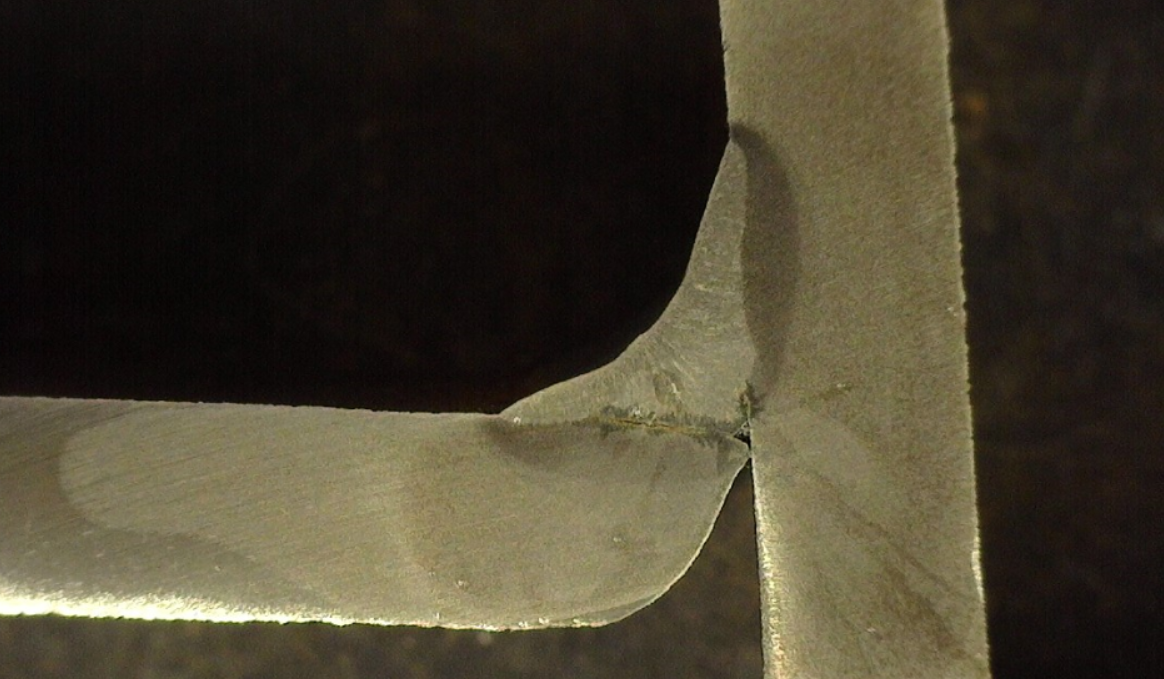
Trouble seeing text or images? View this article in your web browser Hello Reader, We constantly hear welding experts, welding engineers, CWIs and other industry professionals say that concave fillet welds are bad and should not be allowed. This is a hard stance that may be supported by field failure, but more often than not only by anecdotal evidence. However, it is worth noting that a concave fillet weld is not necessary a problem and sometimes it provides a desirable bead profile. The...
Troulbe with text or images? View this in your web browser Hello Reader Most fabrication shops don’t struggle with welding because they lack capability. They struggle because of the decisions they make every day—especially when those decisions are based on habit rather than engineering and economics. One of the most common examples is electrode selection. Many shops default to using flux-cored wire for everything, assuming it provides the best combination of quality and productivity. Others...
Trouble with text or images? View this article in your web browser Hello Reader If you are a Certified Welding Inspector (CWI), welding engineer, or anyone responsible for interpreting welding codes, you have likely encountered situations where the code language is not completely clear. Many of the questions we receive from readers are related to interpreting welding codes and standards such as AWS D1.1 Structural Welding Code – Steel. In many cases the challenge is not simply understanding...