Practical, easy-to-understand welding guidance, real-world examples, and tools to help improve weld quality, productivity, and compliance. For welding professionals including welders, supervisors, inspectors, engineers, and business owners.
Why Some Welding Procedures Should Be Qualified by Testing
|
Trouble with text or images? View this article in your web browser Hello Reader Prequalified welding procedures are an excellent tool. When used correctly, they provide a fast, reliable, and code-compliant way to establish welding procedures without the time and cost of qualification testing. For many fabrication environments, prequalification is not just acceptable—it is the smartest starting point. At the same time, there are situations where a welding procedure must be qualified by testing, even though prequalification is allowed by the governing code. This is not a contradiction. This article is part of the Prequalified vs. Qualified Welding Procedures series, which examines how AWS D1.1 and AWS D1.6 requirements are applied in real fabrication environments. Prequalification Defines What Is Allowed—Not What Is PossiblePrequalified welding procedures are based on combinations of variables that have been demonstrated to produce sound welds within defined limits. Those limits exist to:
Prequalification does not represent the full capability of a welding process. It represents a conservative, proven envelope. When fabrication needs push beyond that envelope, qualification by testing becomes necessary—not because prequalification is inadequate, but because the application has changed. Productivity Improvements Often Drive the Need for QualificationOne of the most common reasons procedures move from prequalified to qualified is productivity. Examples include:
These changes are often motivated by legitimate business goals:
When these improvements fall outside prequalified limits, testing allows the procedure to be validated without compromising quality. Joint Configurations May Exceed Prequalified DetailsPrequalified joint details are intentionally restrictive. They control:
In production, joints are sometimes modified to:
When joint details move beyond those listed as prequalified, the procedure itself must be qualified—even if the welding process and materials remain unchanged. Material and Thickness Combinations Can Require TestingPrequalification applies only to specific base material groupings and thickness ranges. Situations that often require qualification include:
In these cases, testing provides direct evidence that the procedure will perform as intended under the specific conditions being welded. Heat Input and Metallurgical Considerations Still MatterSome applications introduce metallurgical concerns that go beyond what prequalification is intended to address. These may include:
Even when prequalification is technically allowed, testing may be required to verify:
This is an example of engineering judgment overriding convenience—and that is exactly how the system is supposed to work. Qualification Testing Is Not a Failure of PrequalificationIt is important to state this clearly: Needing to qualify a welding procedure by testing does not mean prequalification was a poor choice. In fact, many successful fabrication programs:
Prequalification provides the baseline. The Same Discipline Applies to Qualified Welding ProceduresIt is also important to recognize that qualification testing does not eliminate responsibility. Qualified procedures can still:
The difference is that qualification testing allows procedures to operate outside conservative prequalified limits with evidence, rather than assumption. Practical Takeaways
Series ContextThis article is part of the Prequalified vs. Qualified Welding Procedures series. You can find the full series here: Free Resources for Additional LearningIf you want to better understand when qualification testing is required and how it fits within AWS D1.1 requirements, the following free resources are available:
These resources help clarify the boundary between prequalification and qualification and support defensible decision-making. Prequalified Welding Procedures – Ready for Immediate UseIn many fabrication environments, speed and consistency matter. If you need code-compliant procedures immediately, the following collections are available:
These procedures were developed by welding engineers and Certified Welding Inspectors and are in full conformance with their applicable AWS structural welding code. They provide a reliable starting point when time, quality, and compliance are all critical. |
Welding Answers
Practical, easy-to-understand welding guidance, real-world examples, and tools to help improve weld quality, productivity, and compliance. For welding professionals including welders, supervisors, inspectors, engineers, and business owners.
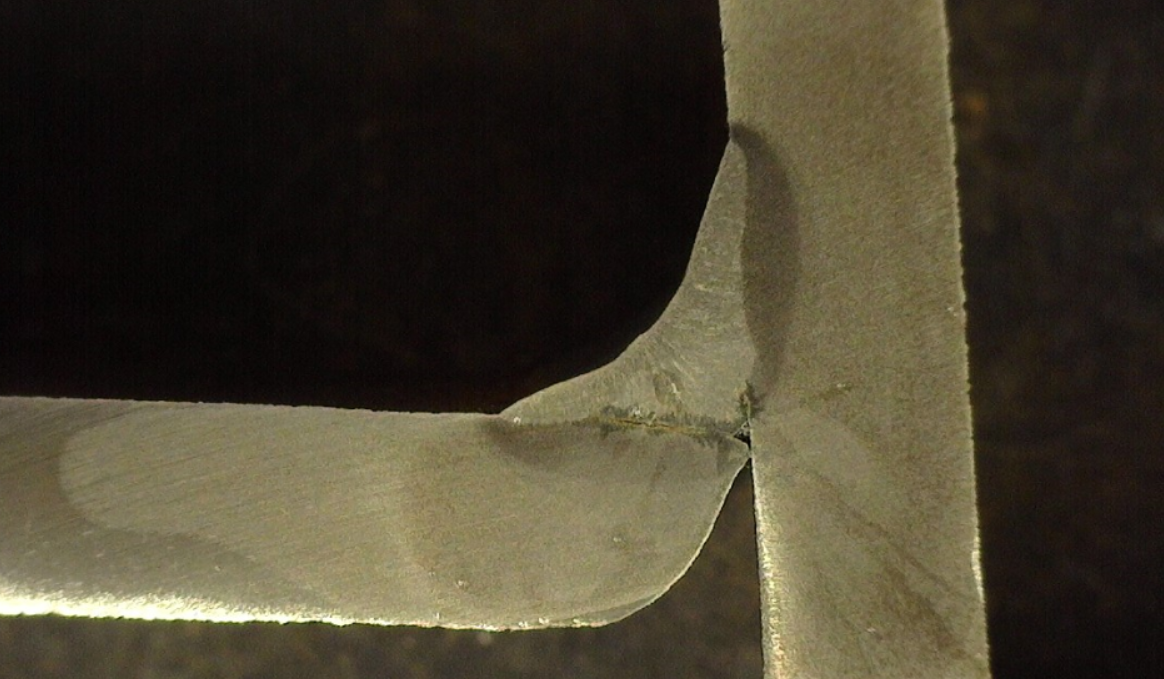
Trouble seeing text or images? View this article in your web browser Hello Reader, We constantly hear welding experts, welding engineers, CWIs and other industry professionals say that concave fillet welds are bad and should not be allowed. This is a hard stance that may be supported by field failure, but more often than not only by anecdotal evidence. However, it is worth noting that a concave fillet weld is not necessary a problem and sometimes it provides a desirable bead profile. The...
Troulbe with text or images? View this in your web browser Hello Reader Most fabrication shops don’t struggle with welding because they lack capability. They struggle because of the decisions they make every day—especially when those decisions are based on habit rather than engineering and economics. One of the most common examples is electrode selection. Many shops default to using flux-cored wire for everything, assuming it provides the best combination of quality and productivity. Others...
Trouble with text or images? View this article in your web browser Hello Reader If you are a Certified Welding Inspector (CWI), welding engineer, or anyone responsible for interpreting welding codes, you have likely encountered situations where the code language is not completely clear. Many of the questions we receive from readers are related to interpreting welding codes and standards such as AWS D1.1 Structural Welding Code – Steel. In many cases the challenge is not simply understanding...