Practical, easy-to-understand welding guidance, real-world examples, and tools to help improve weld quality, productivity, and compliance. For welding professionals including welders, supervisors, inspectors, engineers, and business owners.
Why Welds Crack: Understanding Hot Cracking and Hydrogen Cracking
|
Trouble with text or images? View this article on your web browser Hello Reader Few welding discontinuities create more concern than cracks. Unlike porosity, undercut, or excessive reinforcement, cracks are almost never acceptable under structural welding codes because they can significantly reduce the strength and reliability of a welded joint. More importantly, cracks tend to propagate under service loads, meaning a small crack can eventually become a catastrophic failure. Understanding why welds crack is one of the most valuable skills a welder, welding inspector, supervisor, or welding engineer can develop. Although there are many different types of weld cracks—including crater cracks, toe cracks, root cracks, and longitudinal cracks—most fall into two broad categories:
These two types of cracking often look similar, but they occur for completely different metallurgical reasons. Because their causes are different, the methods used to prevent them are also very different. Understanding the difference is the first step toward eliminating weld cracking in production. Why Cracks Are Different from Other Welding DiscontinuitiesMany welding discontinuities can be tolerated within limits established by welding codes. For example, structural welding codes may permit limited amounts of porosity, slight undercut, or minor profile variations depending on the application. Cracks are different. A crack creates a sharp stress concentration that can continue to grow under cyclic loading or service stresses. Even if the crack is very small, it has the potential to propagate through the weld or base material over time. For this reason, structural welding codes such as AWS D1.1 generally reject cracks regardless of their length.
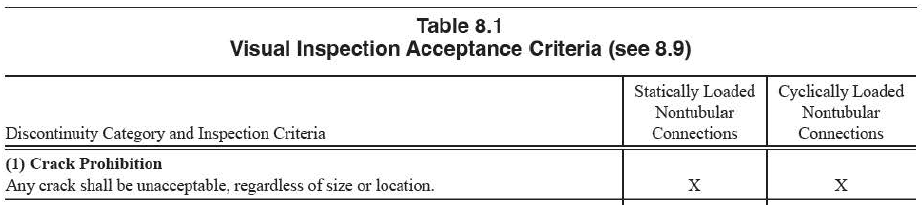
Table 8.1 from AWS D1.1 (2025) provides the visual inspection criteria for welds. As you can see, cracks have no allowances for static or cyclically loaded connections. What Is Hot Cracking?Hot cracking occurs while the weld is solidifying or immediately afterward, when the weld metal is still at elevated temperatures. For this reason, it is often referred to as solidification cracking. The most common form is the familiar centerline crack, which develops near the center of the weld bead as solidification finishes. Unlike hydrogen cracking, hot cracking originates within the weld metal itself rather than the heat-affected zone.
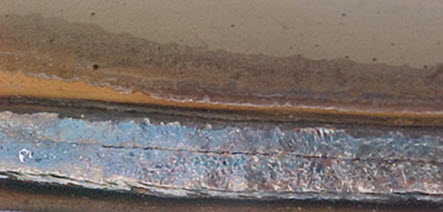
Top view of a centerline crack. Sometimes these cracks are barely visible to the naked eye and thus non-destructive inspection methods like liquid dye penetrant are necessary to detect them. Why Hot Cracking OccursAs molten weld metal cools, it does not solidify all at once. Instead, solidification begins at the fusion boundaries and progresses toward the center of the weld. The last portion of the weld to solidify is located near the weld centerline. This final liquid contains many of the alloying elements and impurities rejected during solidification. Elements such as sulfur and phosphorus have relatively low melting temperatures and tend to concentrate in this final liquid region. If tensile stresses develop before enough solid metal forms to support the weld, the remaining liquid film cannot carry the load and a crack forms. Although sulfur and phosphorus contribute to hot cracking susceptibility, they are only part of the story. Modern research has shown that several factors influence solidification cracking, including:
All of these factors influence whether the final stages of solidification can accommodate the stresses created as the weld contracts. Why Weld Bead Shape MattersOne of the most overlooked contributors to hot cracking is weld bead geometry. Very narrow, deep welds are generally more susceptible to centerline cracking than wider welds.
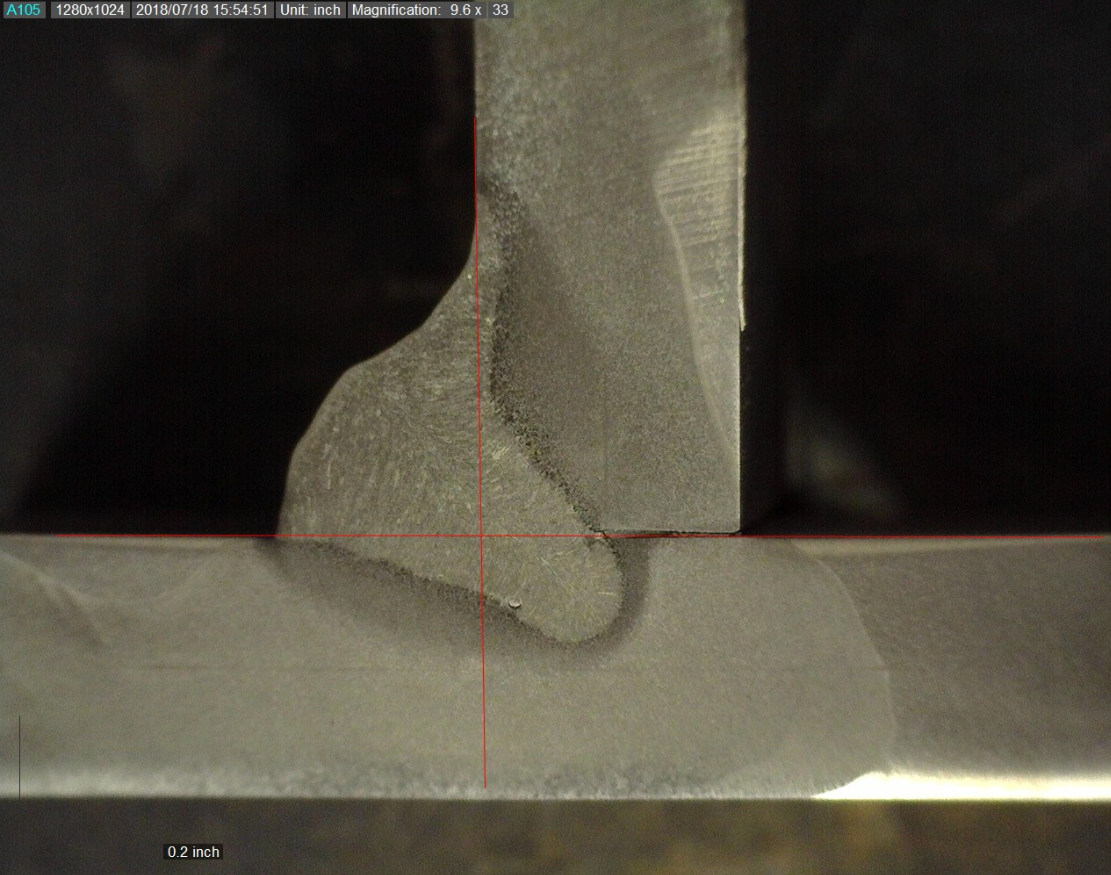
Deep penetrating welds are susceptible to solidification cracks. The base material chemistry plays a huge role in this as impurities will increase the probability of a crack. As the weld freezes from both sides toward the middle, the final liquid becomes trapped along the centerline. If the weld is excessively deep compared to its width, tensile stresses concentrate in this narrow region during the last stages of solidification. For many carbon steel applications, a width-to-depth ratio between approximately 1:1 and 1.4:1 produces a favorable weld profile. When joint geometry or welding parameters create excessively narrow welds, redesigning the joint or adjusting travel speed, amperage, voltage, or electrode angle may reduce cracking susceptibility. Hot Cracking in Stainless SteelMany welders associate hot cracking only with carbon steel. In reality, fully austenitic stainless steel weld metals can be even more susceptible. For example, filler metals such as ER310, which produce nearly fully austenitic weld deposits, are considerably more prone to solidification cracking than filler metals containing small amounts of ferrite. That small amount of ferrite found in fillers such as ER308 and ER309 helps reduce hot cracking by interrupting continuous low-melting films that form during solidification. This is one reason filler metal selection is so important when welding stainless steels. Preventing Hot CrackingThe most effective methods include:
Unlike hydrogen cracking, increasing preheat alone generally does not solve hot cracking. What Is Cold Cracking?Cold cracking is very different. More accurately cit is called hydrogen-assisted cracking (HAC) or hydrogen-induced cracking (HIC). Unlike hot cracking, hydrogen cracking occurs after the weld has solidified. It may appear:
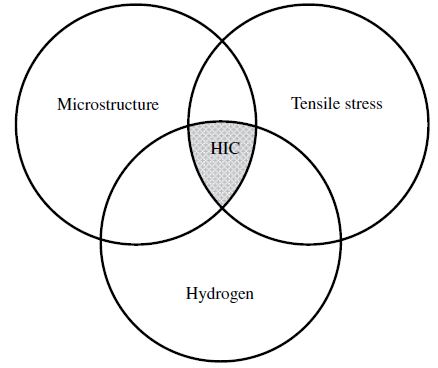
This delayed appearance makes hydrogen cracking especially dangerous because welded assemblies may already have passed inspection or even entered service before cracks become visible. The Three Conditions Required for Hydrogen CrackingHydrogen cracking occurs only when three conditions exist simultaneously:
In order for hydrogen-induced cracking to occur all three factors need to be present. Eliminate one and it can't happen. Remove any one of these three factors and hydrogen cracking becomes highly unlikely. This is perhaps the most important concept in understanding cold cracking. Understanding the Susceptible MicrostructureThe susceptible microstructure is usually hard martensite formed in the heat-affected zone. Martensite develops when certain steels cool rapidly from welding temperatures. Contrary to popular belief, carbon content alone does not determine whether martensite forms. Other alloying elements—including manganese, chromium, molybdenum, nickel, and vanadium—also influence hardenability. This is why welding engineers often evaluate Carbon Equivalent (CE) rather than carbon content alone. Higher carbon equivalent generally means:
Why Preheat WorksMany welders think preheat simply "warms the steel." Its real purpose is much more important. Preheating slows the cooling rate of the weld and heat-affected zone.
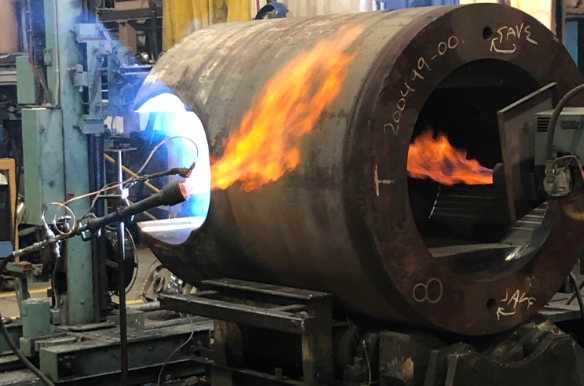
Some applications require heating of the parts before, during and after welding to properly control the cooling rates and prevent cracking. This provides several benefits:
These effects work together to dramatically reduce hydrogen cracking susceptibility. This is why AWS D1.1 specifies preheat requirements for many steels based on thickness and material group. Where Does the Hydrogen Come From?Hydrogen can enter the weld from many sources, including:
Modern low-hydrogen consumables greatly reduce this risk, but only when stored and handled correctly. The Role of Joint RestraintEven when hydrogen and martensite are present, cracking is much less likely if the joint is free to contract. Problems arise when welded components are highly restrained. Examples include:
As the weld cools, contraction generates high tensile stresses. Hydrogen naturally diffuses toward these highly stressed regions, increasing the likelihood of cracking. Why Hydrogen Cracks Often Appear LaterOne of the defining characteristics of hydrogen cracking is delayed appearance. Hydrogen atoms remain mobile after welding. Over time they diffuse toward areas of high triaxial stress within hardened microstructures. Once sufficient hydrogen accumulates, cracking begins. This delayed mechanism explains why AWS D1.1 requires certain weld inspections to be delayed after welding to allow time for hydrogen-assisted cracks to develop before final acceptance.
Table 8.1 of AWS D1.1 (2025) clearly notes that base metals susceptible to hydrogen-induced cracking most be visually inspected no less than 48 hours after welding. Preventing Hydrogen CrackingFortunately, hydrogen cracking can usually be prevented. Effective methods include:
Notice that these recommendations differ significantly from those used to prevent hot cracking. That is because the cracking mechanisms themselves are completely different. Identifying the Correct Crack Is CriticalOne of the most common troubleshooting mistakes is attempting to solve every crack the same way. For example: Increasing preheat may reduce hydrogen cracking but have little effect on solidification cracking. Likewise, changing filler metal chemistry may solve hot cracking while doing very little to prevent hydrogen-assisted cracking. The first step in solving any weld cracking problem is correctly identifying which type of crack occurred. Only then can an effective corrective action be selected. Final ThoughtsHot cracking and hydrogen-assisted cracking are among the most serious welding discontinuities because they originate from fundamentally different metallurgical mechanisms. Hot cracking occurs during solidification and is largely influenced by alloy chemistry, weld bead geometry, and solidification behavior. Hydrogen cracking occurs after welding and requires three conditions: a susceptible microstructure, diffusible hydrogen, and tensile stress. Understanding these mechanisms allows welders, inspectors, and engineers to prevent cracking before production begins rather than repairing expensive failures later. References: Weld Troubleshooting for Non Welding Engineers Welding Metallurgy and Weldability, John C. Lippold |

Welding Answers
Practical, easy-to-understand welding guidance, real-world examples, and tools to help improve weld quality, productivity, and compliance. For welding professionals including welders, supervisors, inspectors, engineers, and business owners.
Trouble with text or images? View this article on your web browser Hello Reader Galvanized steel is widely used in metal fabrication because of its excellent corrosion resistance. From structural steel components and handrails to trailers, agricultural equipment, and outdoor structures, galvanizing provides a relatively inexpensive way to protect steel from corrosion and extend its service life. However, welding galvanized steel presents challenges that are not encountered when welding...
Trouble with text or images? View this article on your web browser. Hello Reader Competition among welding equipment manufacturers is a great thing. Companies such as Miller, Fronius, OTC, Lincoln Electric, and others continue to develop welding machines that are more capable, easier to use, and increasingly affordable. Welders and manufacturers have benefited tremendously from these advancements. However, there is a potential downside: the belief that better welding equipment is the answer...
Trouble with text or images? View this article in your web browser Hello Reader Cracking is a big problem in welding. Many of our customers experience cracking problems on an ongoing basis. Unfortunately, these cracks are not always detected in the shop. Many times cracking occurs once the product is in service. In these cases, cracking can lead to failure and at the very least an upset customer. In more dire cases, the failure may result in significant property damage, injury or even death....